

Thou Shalt Not Kill By Gilbert Keith Chesterton
I had grown weary of him; of his breath
And hands and features I was sick to death.
Each day I heard the same dull voice and tread;
I did not hate him: but I wished him dead.
And he must with his blank face fill my life--
Then my brain blackened; and I snatched a knife.
But ere I struck, my soul's grey deserts through
A voice cried, 'Know at least what thing you do.'
'This is a common man: knowest thou,
O soul, What this thing is? somewhere where seasons roll
There is some living thing for whom this man
Is as seven heavens girt into a span,
For some one soul you take the world away
Now know you well your deed and purpose. Slay!'
Then I cast down the knife upon the ground
And saw that mean man for one moment crowned.
I turned and laughed: for there was no one by--
The man that I had sought to slay was I.
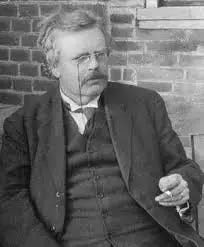
Reading G.K. Chesterton's Thou Shalt Not Kill always brings me face to face with my own struggles, especially in moments when I’ve battled deep despair and self-loathing. In the poem, Chesterton captures something I know all too well—the feeling of being overwhelmed by frustration, weariness, and the desire to escape, even from my own life. There have been times when I’ve grown tired of my own presence, feeling like I was carrying an unbearable weight, wishing for relief in any form, even through violence toward myself or my situation. I imagine many of us, especially in our darkest moments, can relate to that feeling.
But Chesterton’s poem takes a turn that I have found to be both deeply convicting and illuminating. Just as the speaker is about to strike, a voice interrupts, asking him to truly consider what he’s about to do. The voice calls him to remember something essential: that every life, no matter how insignificant it may seem in the moment, has great value in God’s eyes. The man he was about to destroy wasn’t just someone else—it was someone deeply loved by God, someone with inherent worth and purpose.
That voice has spoken to me, too. In those moments when I’ve felt lost, worthless, or overwhelmed by darkness, there’s been a quiet reminder that I, too, am loved by God—exactly as I am. I’m not a burden to be discarded. I am seen by the One who formed me and knows my every pain, my every weakness. The love He has for me is not dependent on my strength or success; it is unconditional and unyielding.
In those quiet, painful moments of self-doubt and discouragement, I’ve been reminded through Chesterton’s words that my life has meaning—not because I understand it or feel it in every moment, but because God sees me as invaluable. He sees me, not as the person I sometimes wish I could escape, but as His beloved child, worthy of grace and love.
Chesterton’s final twist in the poem—the revelation that the man he wished to kill was himself—feels like a painful but beautiful wake-up call. We often battle self-hatred in silence, thinking that if we could just escape ourselves, everything would be better. But the truth is, the self we long to flee is the very self that God loves deeply.
So, if you find yourself in a place of deep weariness or self-doubt, I want to remind you: You are not a mistake. You are not unworthy. You are seen, known, and loved by the Creator. There’s a purpose to your life that may not always be clear, but it is real. Even in your darkest moments, God is holding you, and His love for you is steadfast. When we stop and acknowledge our worth in His sight, we can begin to see ourselves not as a burden, but as a beloved creation—worthy of care, healing, and hope.