

There are only two worldviews that are truly consistent—two that take their own presuppositions and follow them to their natural conclusions. Not two correct worldviews, but two that make sense on their own terms.
The first is Christian theism. This worldview holds that God created the world and reigns as Lord over all. He made us in His image and endowed us with value and purpose. Yet we sinned and rebelled against Him, bringing death and destruction into the world. God sent His Son, Jesus, who lived a perfect life, suffered, and died on the cross to bear our sin and its consequences. Those who believe in Him are redeemed, and He will one day return to complete His redemptive work, bringing about a new heaven and a new earth where God once again dwells with humanity in perfect harmony.
The second logically consistent worldview is nihilism. In this view, the universe has no meaning or purpose. We exist by random chance—mere cosmic stardust assembled by accident. If this is true, then there is no objective morality, no beauty, and no truth. Without a Creator, purpose, or inherent value, the only consistent conclusion is that nothing truly matters. As one existential philosopher put it, the only real question each of us must answer is whether or not to commit suicide.
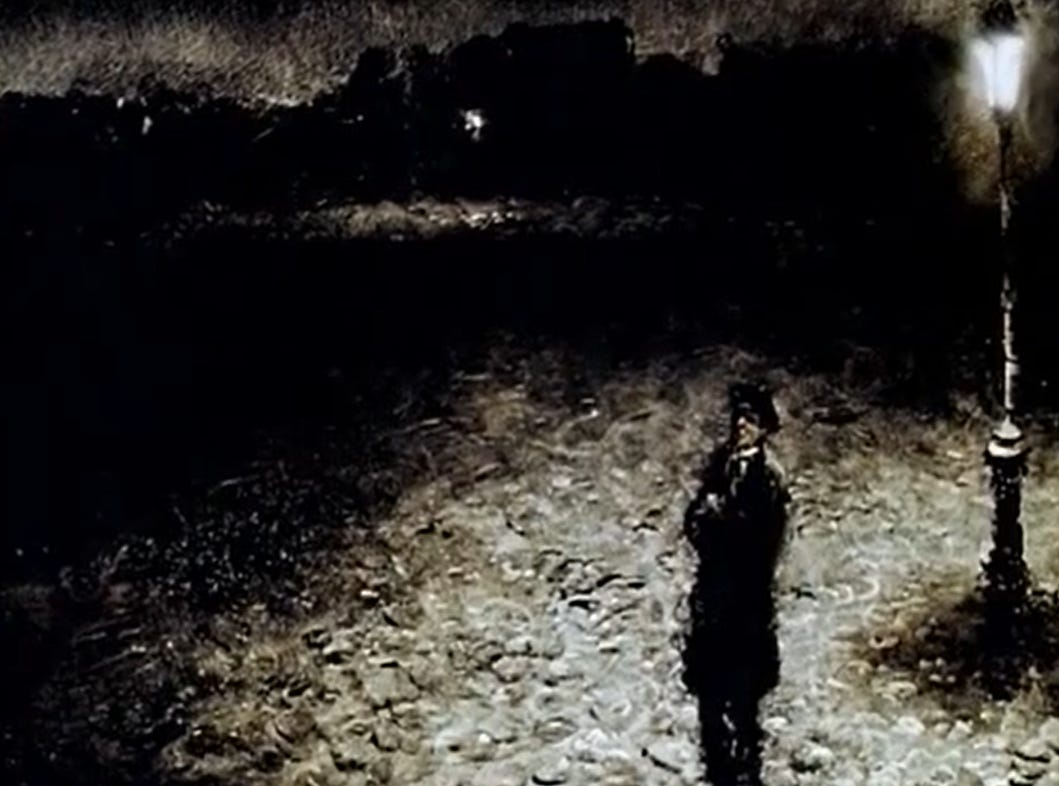
Fyodor Dostoevsky, the 19th-century Russian novelist, wrestled with these two worldviews in his writing. Recently, I came across a short story he wrote where I believe he perfectly encapsulated these two worldviews. In The Dream of a Ridiculous Man, Dostoevsky introduces us to our protagonist—a man who is on his way home about to commit suicide. He begins the tale by telling the readers that he is a ridiculous man.
“I am a ridiculous man. They call me a madman now. That would be a distinct rise in my social position were it not that they still regard me as being as ridiculous as ever. But that does not make me angry any more. They are all dear to me now even while they laugh at me—yes, even then they are for some reason particularly dear to me. I shouldn’t have minded laughing with them—not at myself, of course, but because I love them—had I not felt so sad as I looked at them. I feel sad because they do not know the truth, whereas I know it. Oh, how hard it is to be the only man to know the truth! But they won’t understand that. No, they will not understand.”
In the opening, as he describes his youth and the path that led him to this place, he begins by articulating the key problem he faced:
“Perhaps it was because I was becoming terribly disheartened owing to one circumstance which was beyond my power to control, namely, the conviction which was gaining upon me that nothing in the whole world made any difference.”
Then, one dismal evening, he states that he was returning home. As he was walking, he looked up and saw a star in the sky. It was this that triggered the thought, stating,
“That was because the little star gave me an idea: I made up my mind to kill myself that night.”
As the man walked home, resolved to end his life that night, he looked up at the sky, and in that moment, a little girl suddenly grabbed his arm. The street was nearly empty, and she stood before him, soaked through, trembling, and terrified. Her torn, wet boots and desperate cries for her mother haunted him. It was clear she was pleading for help; her mother was dying or in danger nearby, but he refused. Cold and detached, he told her to find a policeman. When she wouldn’t leave, he grew angry, shouting and stamping his foot until she ran off to beg another passerby for help.
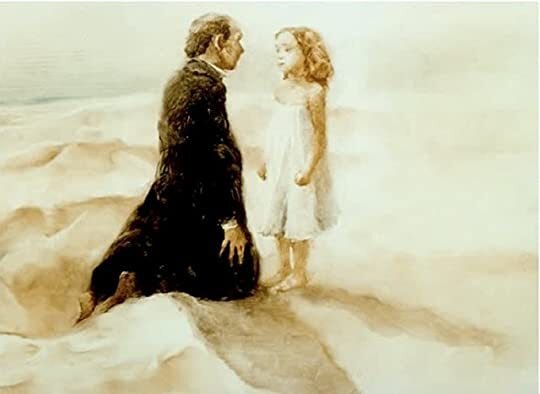
This encounter—the innocent suffering child and his own hardened indifference—becomes the spark that exposes the emptiness of his nihilism and begins to unravel his conviction that nothing matters.
As he falls asleep, his despair carries him into a vivid and transformative dream. In it, he envisions himself taking his own life, only to awaken in another world—a world untouched by sin, radiant with innocence and harmony. The people there live in perfect unity with one another and with God. They know no deceit, no pride, no suffering, and no death. Their joy is pure and unbroken.
For a time, he delights in their company, marveling at their beauty and simplicity. But slowly, something within him changes. He teaches them to lie, to covet, to seek their own way, and the same corruption that plagues our world takes root in theirs. The paradise he once admired decays before his eyes. The people who were once pure become violent, selfish, and proud. He watches in horror as this new world mirrors the brokenness of his own.
When he finally awakens, he is overwhelmed with repentance and awe. The dream leaves him convinced that love is the only true meaning of life and that all is not meaningless after all. His encounter with the little girl and the vision of that lost paradise awaken in him a deep longing for redemption. He rises with a new purpose—to live for others, to love, and to proclaim that life, even in its pain and confusion, is sacred and worth living.
He comes to confess the truth, stating,
“Then, suddenly, as I was standing and coming to myself, I caught sight of my gun lying there ready and loaded. But I pushed it away from me at once! Oh, how I longed for life, life! I lifted up my hands and called upon eternal Truth—no, not called upon it, but wept. Rapture, infinite and boundless rapture intoxicated me. Yes, life and—preaching! I made up my mind to preach from that very moment and, of course, to go on preaching all my life. I am going to preach, I want to preach. What? Why, truth. For I have beheld truth, I have beheld it with mine own eyes, I have beheld it in all its glory!”
He is now the ridiculous man he claimed to be in the beginning, but he is ridiculous not because he believes there is no meaning, but because he has found the meaning of life—the truth of God’s existence and work in this world.
We Need More Ridiculous Men
The problem with much of today’s philosophical thought is that it refuses to wrestle with these two extremes. We have become half-baked men with half-baked ideas—people who long for the grounding, beauty, and morality of Christian theism, yet crave the intellectual credibility of pursuing an anti-theistic worldview. We desire to throw off God because we do not want to face our own sin and its consequences. In doing so, we bring greater destruction upon ourselves and others.
Yet the only hope we have is to become fools. As Scripture says, “Let no one deceive himself. If anyone among you thinks that he is wise in this age, let him become a fool that he may become wise” (1 Corinthians 3:18). As Dostoevsky shows us, we must become “ridiculous men”—willing to be thought foolish by the world—in order to find true wisdom, meaning, and redemption.