

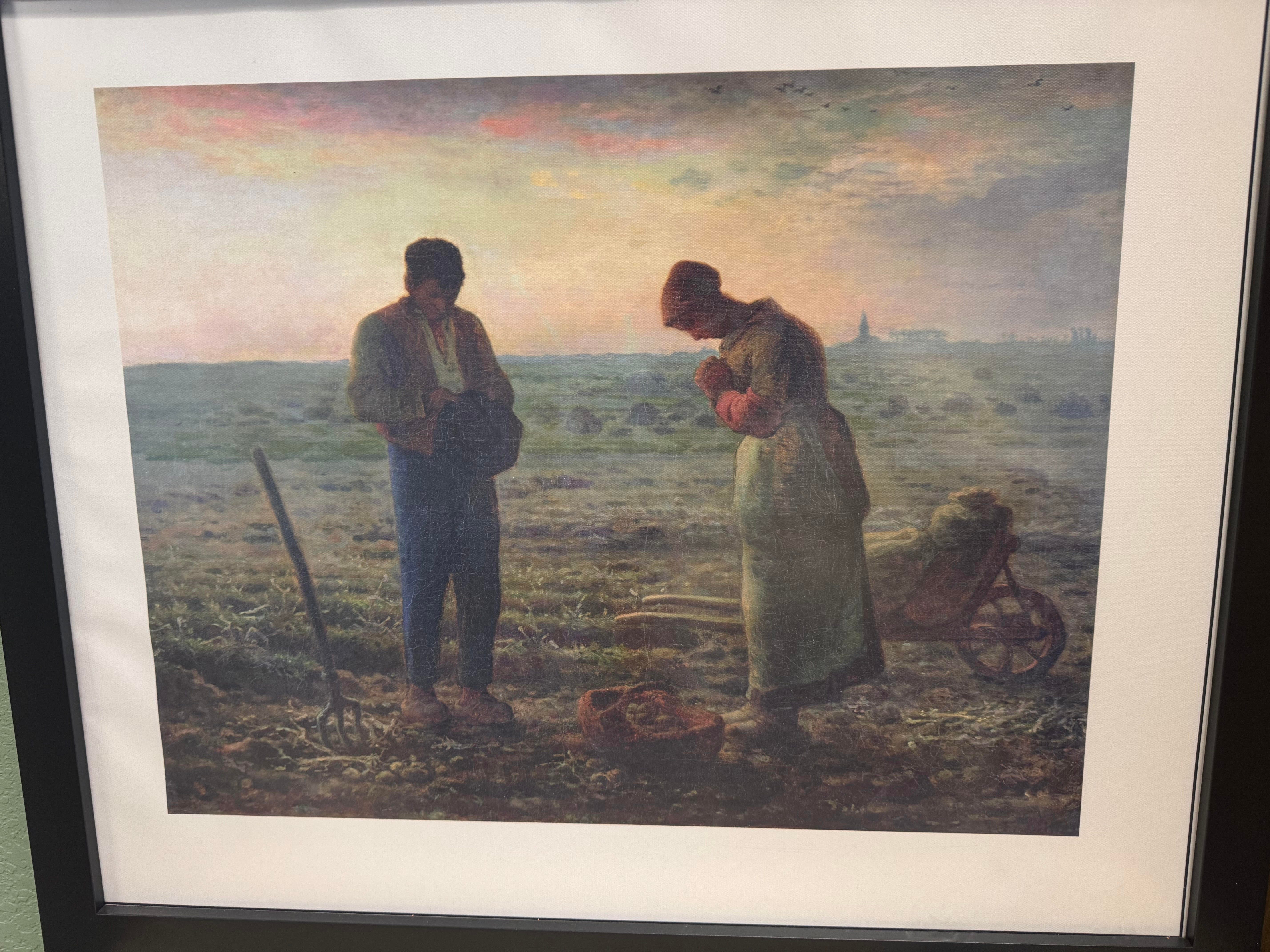
Jean-François Millet’s The Angelus is a quietly famous painting. If you’ve ever watched The Andy Griffith Show, you might have noticed it hanging in the background. Though it now holds a place of honor in art history, its subject is remarkably simple: two farmers pausing in prayer at the sound of the church bell. No kings, no heroes, no great moments of war or conquest—just two anonymous laborers bowing in the stillness of their fields.
In 1865, Millet explained the inspiration behind the piece: “The idea for The Angelus came to me because I remembered that my grandmother, hearing the church bell ringing while we were working in the fields, always made us stop work to say the Angelus prayer for the poor departed.” The prayer itself is short but profound:
Pour forth, we beseech Thee, O Lord, Thy grace into our hearts, that we to whom the Incarnation of Christ, Thy Son, was made known by the message of an angel, may by His Passion and Cross be brought to the glory of His Resurrection. Through the same Christ our Lord. Amen.
Millet’s choice to center his work on ordinary people was radical in his day. The art world largely focused on grand themes—biblical epics, Greek myths, and portraits of rulers. Yet Millet painted the fields and the people who tilled them. He saw something sacred in their toil, something worthy of capturing on canvas.
A Hidden Grief
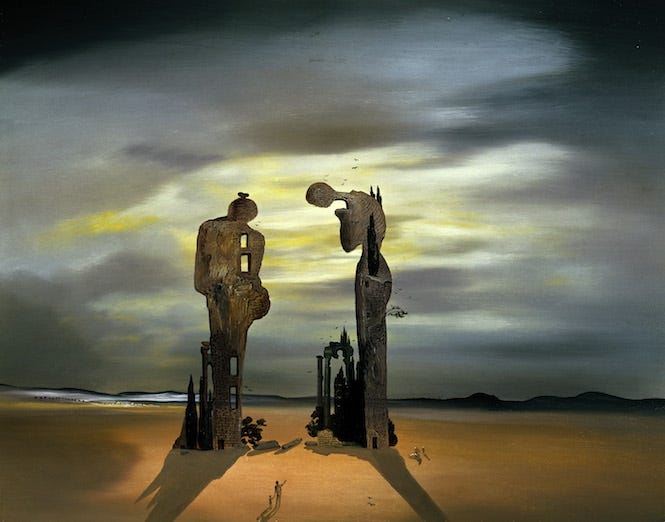
Years after Millet’s death, The Angelus caught the attention of Salvador Dalí. The surrealist painter became obsessed with the piece, convinced that it contained a hidden sorrow. He believed that the bowed heads of the farmers were not just expressions of devotion but of mourning. Dalí even requested an X-ray examination of the painting. What was discovered shocked the art world: beneath the surface layers of paint, at the feet of the peasant couple, was the faint outline of a small coffin.
Had Millet originally intended to depict a moment of grief? Did he paint over the child’s coffin to make the scene more palatable to buyers, or did he simply change his mind? We may never know. But what The Angelus reveals is that even in the most ordinary moments of life—planting, harvesting, pausing to pray—there is deep meaning, even grief, hidden just beneath the surface.
The Weight of Small Lives
Our world is often obsessed with grandeur. We celebrate the biggest, the strongest, the most accomplished. But Scripture teaches us that the Lord sees what the world overlooks.
Are not two sparrows sold for a penny? And not one of them will fall to the ground apart from your Father. But even the hairs of your head are all numbered. Fear not, therefore; you are of more value than many sparrows. (Matthew 10:29-31, ESV)
In the fields of France, a nameless couple bows their heads in a simple act of prayer, and yet their moment has been immortalized. God does not overlook the small. He sees the farmers in their fields. He hears the whispered prayers of grieving parents. He numbers even the hairs on our heads.
What The Angelus quietly proclaims is this: the smallest moments, the smallest prayers, and even the smallest lives are known and cherished by God. In a world that clamors for greatness, it is in the stillness of faithfulness that we often encounter the divine.
So whether you are tending a field, raising a child, or carrying a hidden grief, know this—your life, however small it may seem, is seen. It is valued. And it is held in the hands of the One who never forgets the least of these.