

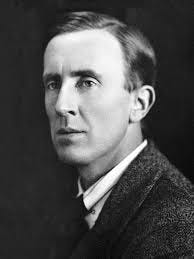
I was reading The Letters of J.R.R. Tolkien, which has been a fascinating experience. While Tolkien is most well-known for his work on The Hobbit and The Lord of the Rings, he was also a man of immense faith. This is evident in his fiction, but his private letters reveal some exciting behind-the-scenes insights into his writing and a strong touch of fatherly wisdom as he wrote to his sons, who were engaged in military service during the Second World War.
One key insight came in response to his son complaining about listening to a bad sermon while in South Africa. Tolkien, himself a layman, gives some wonderful advice that every preacher should heed:
“But as for sermons! They are bad, aren’t they! Most of them from any point of view. The answer to the mystery is prob. not simple; but part of it is that ‘rhetoric’ (of which preaching is a dept.) is an art, which requires (a) some native talent and (b) learning and practice. The instrument used is v. much more complex than a piano, yet most performers are in the position of a man who sits down to a piano and expects to move his audience without any knowledge of the notes at all. The art can be learned (granted some modicum of aptitude) and can then be effective, in a way, when wholly unconnected with sincerity, sanctity, etc. But preaching is complicated by the fact that we expect in it not only a performance, but truth and sincerity, and also at least no word, tone, or note that suggests the possession of vices (such as hypocrisy, vanity) or defects (such as folly, ignorance) in the preacher.
Good sermons require some art, some virtue, some knowledge. Real sermons require some special grace which does not transcend art but arrives at it by instinct or ‘inspiration’; indeed, the Holy Spirit seems sometimes to speak through a human mouth providing art, virtue, and insight he does not himself possess: but the occasions are rare. In other times I don’t think an educated person is required to suppress the critical faculty, but it should be kept in order by a constant endeavor to apply the truth (if any), even in cliché form, to oneself exclusively! A difficult exercise. . . .”1

Good Sermons Require:
Some Art
As Tolkien points out, even in his day many pastors were not equipped in the art of rhetoric. Rhetoric is simply the art of persuasive public speaking. While some may question this and say that pastors should just trust the Holy Spirit and let Him lead their preaching, Tolkien would argue that if you have something worthy of saying, it is worthy of saying it in the most beautiful and effective manner. It is widely agreed that the Apostle Paul himself would have been a student of rhetoric, and this comes through in his preaching and writing. For the preacher who struggles, there is hope because, as Tolkien also says, "The art can be learned (granted some modicum of aptitude) and can then be effective."
Some Virtue
Preaching is complicated because not only should the preacher be well-versed in rhetoric, but there is also a requirement of virtue. Preachers must be holy and set apart. They must be transparent and honest. To lack this is to lack any weight behind your words. If your study of scripture has not impacted you how will it ever make an impact on your audience.
Some Knowledge
Finally, a good sermon, as Tolkien says, should have some knowledge. A preacher who ignores his study can get up and wax eloquently, but if he has nothing of substance to say, he is wasting the listener's time. Pastors must be knowledgeable in scripture and its interpretation but must not simply stand and recite their own commentary of the scriptures but must know it so well they they can explain its interpretation and application to a 8 year old boy and the 88 year old widow.
Real Sermons Require Some Special Grace
Yet his most important insight is that a sermon, unlike a speech, must be set on fire by the Holy Spirit. Stating that this itself will aid by “providing art, virtue, and insight he does not himself possess.” God uses our preparation, but reliance on His power is necessary for every preacher of the gospel.
So to my fellow preachers, take heart. Study hard—not only scripture but also rhetoric, arts, and literature—and pray even harder. Trust that God can and will use you, and even your worst sermon, if it is faithful to His word, to advance His cause.
The Letters of J.R.R. Tolkien: Revised and Expanded Edition, pg 109