

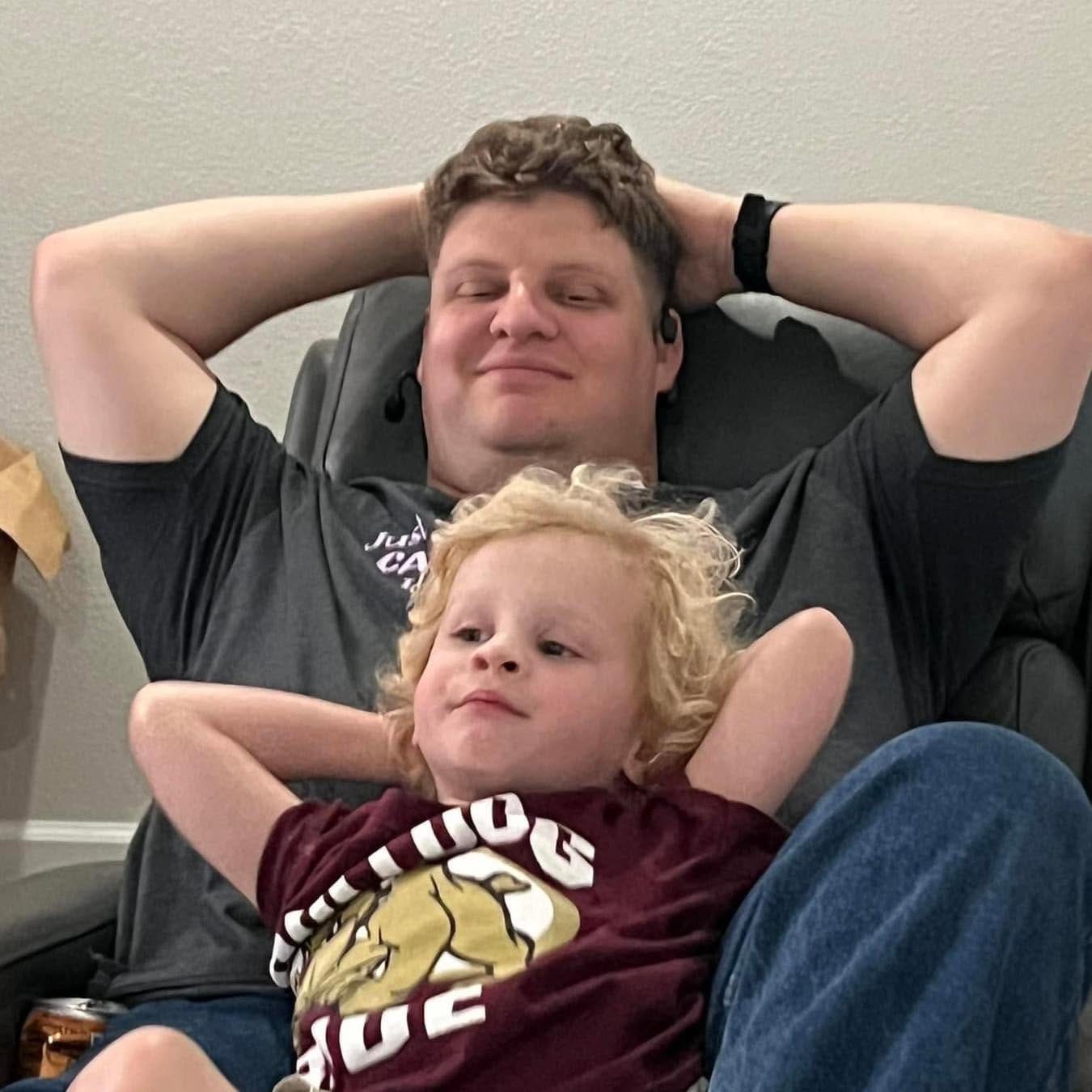
The easiest way to shatter the image you have of what it looks like to be a perfect parent is to actually become one.
Before becoming a parent, I will confess that in my mind I was the perfect parent. I had all the discipline, love, strength, and strategies figured out. I had read the Scriptures and parenting books, and I had seen prime examples.
Yet, like in so many areas of our lives, God has a way of shattering our pride and humbling us. I now parent two children with disabilities and one rambunctious toddler, and I believe that I know far less than I did when I began seven years ago. Yet there are things that I am more and more confident in.
Discipline Matters
The Scriptures are quite clear that discipline matters in raising children. The often-quoted (and misquoted) “Spare the rod, spoil the child,” which actually reads, “Whoever spares the rod hates his son, but he who loves him is diligent to discipline him.” ( Proverbs 13:24) The rod here in Hebrew is the rod of a shepherd, one who lovingly guides and leads the sheep. It is not a tool of abuse but rather a tool of protection. Discipline is used to keep a child within the realm of safety.
Yet so many have used this text as an excuse to vent the full force of their anger upon their children. I have had self-identifying Christians tell me that I was a bad parent because my autistic child was having a meltdown or was not potty trained. The irony of people telling me with straight faces about the abuses that they faced as children, where their parents would beat them indiscriminately and without love to ensure compliance, and how they were not harmed, is difficult to miss. The irony continues when you examine the lives of these people who are serial adulterers and on their fourth or fifth marriage, and their children no longer speak to them.
For my child with autism, who has an extremely high pain tolerance, physical discipline has proved ineffectual. Discipline is only effectual to the level at which the person receiving it is able to connect the consequences of what they have done with their actions. If a person has no feeling in their hands, then they will not notice their hand burning upon a hot stove.
Yet this does not mean that discipline is never required, but that it must be directed at the child and at their level of understanding. Those who parent children with disabilities are not excused from disciplining their children but have to learn how to bridge the communication barrier to find what communicates the danger that their children are entering into. Ultimately it is built on the trust that the one disciplining has love for the one receiving disipline.
Love Matters More
My knowledge of parenting is not based upon my own experience. I am in the middle of the trenches, and when you are in the fog of war, you cannot see the whole battlefield. You have to trust your commanders, those who have gone before you and see the landmines laid out in front of you. In Scripture, we have the full blueprint of the battlefield, and in the church we have the example of faithful parents who have gone before us.
In Ephesians 6:4, Paul says:
“Fathers, do not provoke your children to anger, but bring them up in the discipline and instruction of the Lord.”
This is about as succinct a summary of the duty of any father as you can find, and there are no exclusions made here for fathers of children with disabilities. This is in the context of the household code given in Ephesians 6. Wives have been called to submit, husbands have been called to Christlike sacrificial love, and children have been called to obedience. Here, fathers are commanded to use their authority in godliness. Fathers are to parent in such a way that they do not allow their anger and preferences to dominate their children, thus embittering them and provoking them to anger. This does not mean that your children will never be angry, but rather that a loving and understanding father seeks to always draw his children through his discipline and instruction closer and closer to the Lord.
The Father relationship is deeply embedded into the character of who God is. God is love. He, as a loving Father, hears our prayers and our petitions. As a loving Father, he listens and understands our weaknesses. He disciplines and instructs in light of those weaknesses. He is patient and slow to anger because he loves.
The most faithful fathers that I have known—and by that definition, I mean those fathers whose children are still faithfully following the Lord Jesus—are the fathers who, though they are imperfect and although they may have failed in thousands and thousands of ways, were a persistent force of godly love and authority in their homes. They disciplined their children, but not out of anger. They gave wise counsel and instruction, but firmly and in love. They modeled that love in their love for their wives.
Being a consistent disciplinarian is key, but discipline separate from instruction, and lacking the grounds and security found in love, will embitter and cast children far away. Parenting children with disabilities has placed these things on the extreme. My wife and I have to discern, like every parent, what is childishness and foolishness. What is rebellion and what is a lack of skill or ability? What emotions are driven by fear, pain, and an inability to communicate, and what are driven by rebellion? This is far more difficult than it is with a typical child. But the love at the center of it all enables you to ground yourself in your own imperfections.
The love and humility of a parent who can apologize to their child when they themselves are sinful toward them shouts to the glory of Christ rather than a prideful, authoritarian parent who cannot admit their wrong. It reminds the child that we all submit to someone higher, and for us, that is our heavenly Father.
Faithfulness Matters Most
Robert Murray M’Cheyne wrote, “The greatest need of my people is my personal holiness.” This is true of ministers, and it is true of fathers as well. What my children need more than my discipline, or even the hugs and kisses at the end of the day, is that I would pursue my own personal holiness and relationship with my heavenly Father. They need to see me wrestle with my sins. They need to see me grow in patience and love, both toward them and their mother. They need to see and hear me wrestle with anxiety and pain and ultimately turn it over to the Lord.
If you want godly children, we have the opportunity to model it for them every single day in our childlike faith in our heavenly Father. For those who have children with disabilities, whether physical or intellectual, you have an even greater opportunity. With more burdens, we have the ability to cast even more upon the shoulders of Christ and see him bear our burdens well. We get to model what faithful dependence looks like.
As a parent of a child with disabilities, you may not be disabled yourself, but you bear the extra load in a way similar to what your child bears every day. Are you carrying it yourself or trusting in your Father to strengthen and lift you up.
Holiness is not simply an aura or a vibe around people who are considered spiritual. It is the growth in obedience that comes as we behold the light of the knowledge of the glory of God found in the face of Jesus Christ. In that beholding, we are being transformed, and as we are transformed and grow in our faith and dependence, we are modeling that for our children.
What it all comes down to is not, “Are you the perfect parent?” because you won’t be. It is, “Are you showing up day after day, growing in patience, growing in holiness, and growing closer to your heavenly Father?”
While there are no guaranteed outcomes as a parent, the closer we grow to the heart of the Father, the more faithfully we can lead our children toward him.