


Poverty is a pervasive issue that manifests in various forms across the globe today. In the United States, the federal poverty guidelines for 2025 are as follows:
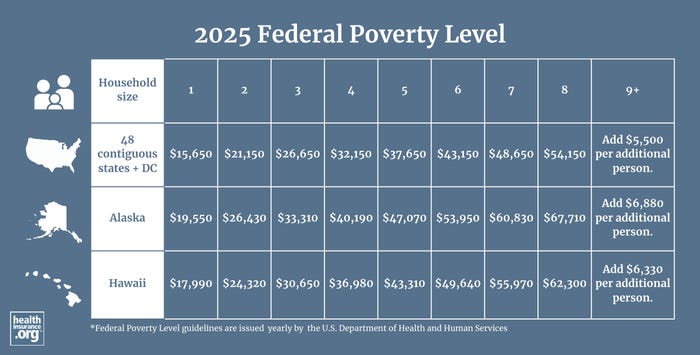
These guidelines are set by the Department of Health and Human Services (HHS) to determine eligibility for various federal programs and are adjusted annually to reflect changes in the cost of living.
Yet, these terms are extremely relative. Around the world today, poverty looks vastly different. According to the World Bank, approximately 3.5 billion people—44% of the global population—live on less than $6.85 per day. In many places, access to clean water, medical care, and basic nutrition is scarce.
When Jesus stepped into the world, poverty was already a prevalent issue. Many individuals struggled to provide for their families, faced unemployment, and lacked basic necessities. Jesus made it clear that His mission included reaching the poor and the oppressed. As He declared in Luke 4:18-19:
"The Spirit of the Lord is upon me, because He has anointed me to proclaim good news to the poor. He has sent me to proclaim liberty to the captives and recovering of sight to the blind, to set at liberty those who are oppressed, to proclaim the year of the Lord’s favor."
Jesus did not just preach to the poor—He met their needs. He fed the hungry, healed the sick, and lifted the downtrodden. In Matthew 11:4-5, He pointed to these actions as proof of His ministry:
"The blind receive their sight and the lame walk, lepers are cleansed and the deaf hear, and the dead are raised up, and the poor have good news preached to them."
His ministry was not only about spiritual salvation but also about restoring dignity and hope to those in need.
Jesus also taught His followers to care for the poor. In Matthew 25:35-40, He equated serving the needy with serving Him:
"For I was hungry and you gave me food, I was thirsty and you gave me drink, I was a stranger and you welcomed me, I was naked and you clothed me, I was sick and you visited me, I was in prison and you came to me… Truly, I say to you, as you did it to one of the least of these my brothers, you did it to me."
In other words, our response to poverty reflects our faith.
Even in His teachings, Jesus challenged social norms, urging generosity toward those who could not repay. In Luke 14:13-14, He instructed:
"But when you give a feast, invite the poor, the crippled, the lame, the blind, and you will be blessed, because they cannot repay you. For you will be repaid at the resurrection of the just."
His perspective was radically different from the world’s tendency to honor the rich and overlook the poor.
Yet, notice in His quote from Isaiah in Luke 4, His message was not to bring wealth to those who were poor but to bring good news—literally, to bring the gospel to the poor. Jesus did not come to start social programs but to do something bigger and grander than that. He came to bring the good news that God so loved the world that whoever believes in Him shall have eternal life.
The church is called to meet the emergency needs of the believers in their midst and to love the poor of the world practically, but ultimately, the purpose is to proclaim the good news: that in Christ alone is hope to be found. In Christ alone will injustice be made right. In Christ, there is hope and freedom for those who are suffering. The answer was never more wealth, but eternal life. The answer is the redemption of all of creation.
Jesus said in Matthew 26:11, "You will always have the poor among you." Until the world is fully redeemed and Christ returns, the world will have poverty, but God has secured a greater future for all who trust in Him.
Isaiah 61:1-3 affirms this mission of hope and restoration:
"The Spirit of the Lord God is upon me, because the Lord has anointed me to bring good news to the poor; He has sent me to bind up the brokenhearted, to proclaim liberty to the captives, and the opening of the prison to those who are bound; to proclaim the year of the Lord’s favor, and the day of vengeance of our God; to comfort all who mourn; to grant to those who mourn in Zion—to give them a beautiful headdress instead of ashes, the oil of gladness instead of mourning, the garment of praise instead of a faint spirit; that they may be called oaks of righteousness, the planting of the Lord, that He may be glorified."
God so loved the poor that he sent his son to proclaim the good news of freedom, redemption, and hope to be found in Christ.