

As I have been preaching through the book of First Corinthians, I’ll be honest — chapters 11–14 have taken me into some of the weeds of Paul’s writing. In these chapters Paul addresses issues such as head coverings, the Lord’s Supper, and spiritual gifts, topics that have often been flash points for division among Christians.
In the last century, discussions about spiritual gifts have become an especially significant dividing line among many Protestant denominations, particularly with the rise of Pentecostal and charismatic movements. Because of this, thinking carefully about the nature and purpose of these gifts is especially important today.
In the midst of wrestling with difficult passages, I am encouraged by what the Apostle Peter says about Paul’s letters, acknowledging: “…there are some things in them that are hard to understand, which the ignorant and unstable twist to their own destruction…” (2 Peter 3:16, ESV). This reminder encourages humility and careful study when approaching passages like these.
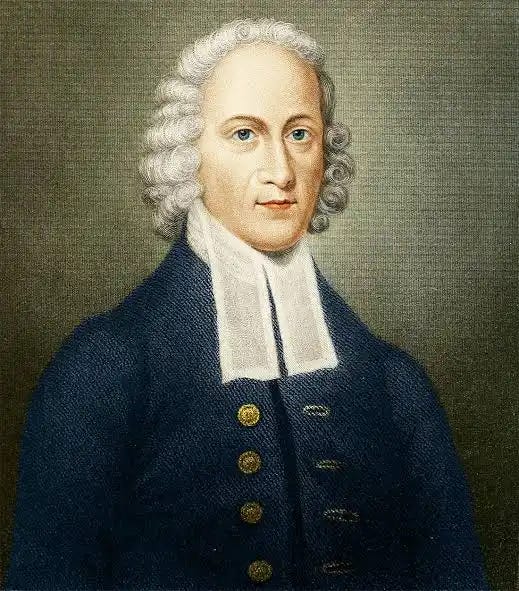
Because of this, it is often helpful to listen to voices from earlier generations of the church who wrestled with these passages long before our modern debates. One resource that has been particularly helpful to me is Charity and Its Fruits by Jonathan Edwards, which I have now read through twice. In his second sermon, Edwards offers a helpful framework for thinking about the gifts of the Spirit by distinguishing four categories of God’s gifts:
Common gifts — influences of the Spirit experienced by both believers and unbelievers.
Saving gifts — graces given to those united to Christ, such as faith and love.
Extraordinary gifts — miraculous gifts like prophecy, tongues, and miracles given at key moments in redemptive history.
Ordinary gifts — the regular gifts the Spirit gives for the ongoing life and growth of the church.
Edwards’ most helpful distinction for understanding passages like 1 Corinthians 12–13 is between extraordinary gifts and ordinary gifts. Extraordinary gifts—such as prophecy, tongues, and miracles—were often given to reveal or confirm God’s message and to establish the early church.
Yet Edwards carefully notes that extraordinary gifts, while miraculous, do not guarantee that a person has received salvation. Scripture gives several examples where God granted such gifts to individuals who were not truly walking with Him. Balaam prophesied when the Spirit of God came upon him (Numbers 24:2). King Saul prophesied among the prophets (1 Samuel 10:10–11). Judas was sent out with the other disciples and participated in their ministry (Matthew 10:1–8).
Because of this, Jesus warns that some will say:
“Lord, Lord, did we not prophesy in your name, and cast out demons in your name, and do many mighty works in your name?”
— Matthew 7:22 (ESV)
For Edwards, this reinforces Paul’s central point in 1 Corinthians 13: the greatest evidence of the Spirit’s work is not miraculous power but genuine Christian love.
“If I speak in the tongues of men and of angels, but have not love, I am a noisy gong or a clanging cymbal.”
— 1 Corinthians 13:1 (ESV)
Extraordinary gifts may amaze people for a time, but love reflects the transforming work of the Spirit in the heart and produces lasting fruit. Love, Edwards argues, is the true mark of genuine union with Christ.
Practical Implications
This has several practical implications for us.
First, every believer has been given gifts by God, and those gifts exist to build up the body of Christ (Ephesians 4:11–13; 1 Peter 4:10).
Second, the gifts that most believers will exercise are not dramatic or miraculous, but the ordinary gifts that sustain the life of the church — teaching, serving, encouraging, giving, leading, and showing mercy (Romans 12:6–8).
Third, Scripture calls us not merely to identify our gifts, but to grow in love, which Paul describes as the greatest and most enduring fruit of the Spirit (1 Corinthians 13:8–13; Galatians 5:22–23).
Fourth, experiences of the supernatural—whether real or perceived—are not the ultimate test of salvation. The most important question is this: Do you love? Do you love God, and do you love His people? Scripture reminds us, “We know that we have passed out of death into life, because we love the brothers” (1 John 3:14, ESV).
Conclusion
As we continue walking through First Corinthians, Paul’s message becomes clear: spiritual gifts are valuable, but they are not the ultimate goal. Their purpose is to help believers love and serve one another more faithfully.
Gifts may differ. Roles may vary. But the measure of spiritual maturity is not how impressive our abilities appear — it is how deeply we reflect the love of Christ.
As Scripture reminds us:
“So now faith, hope, and love abide, these three; but the greatest of these is love.”
— 1 Corinthians 13:13 (ESV)
May we pursue not only clarity in doctrine but also Christlike love in practice, using whatever gifts God has given us for the good of His church and the glory of our Savior.