

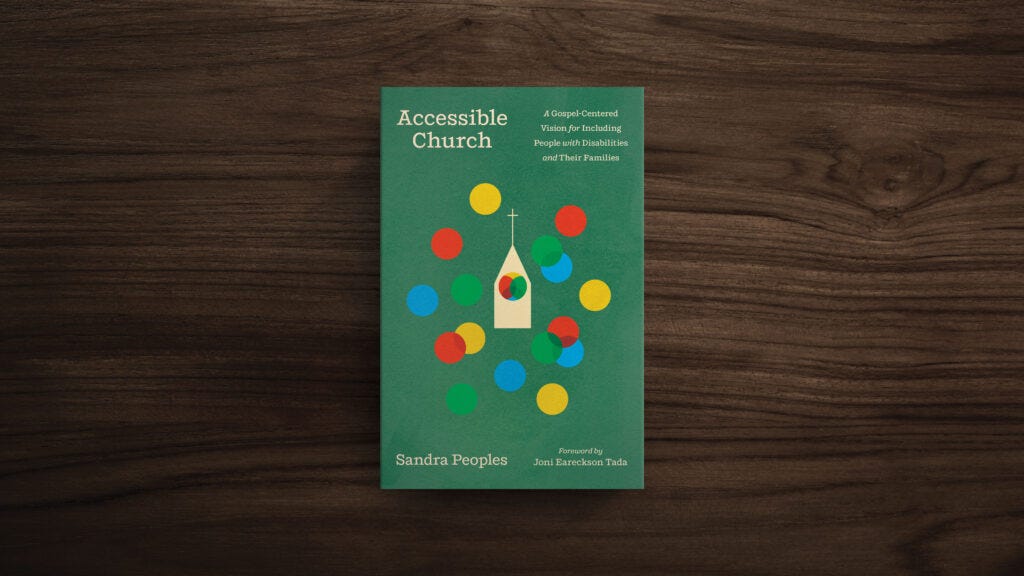
There are currently millions of individuals and families living with disabilities who feel isolated from the church—often not because of theology, but because of physical, social, or cultural barriers.
Is your church accessible? Sandra Peoples, the Disability Ministry Consultant for the Southern Baptists of Texas Convention, invites church leaders and members to wrestle with this critical question. In Accessible Church, she provides a gospel-centered, biblically grounded, and immensely practical guide to making our churches places of belonging for people with disabilities and their families.
The Need Made Clear
From the opening pages, Peoples lays out both the theological and practical need for disability inclusion in the church. She doesn’t treat disability ministry as a side project or an optional program, but as a gospel issue tied to the very mission of the church. She writes,
“Disability isn’t a mistake. It’s not a punishment. It’s not a surprise to God. Disability exists because we live in a fallen world, but it can also be a means by which God displays his glory and grace.”
Peoples anchors her message in Scripture, showing how the Bible consistently calls God’s people to embrace and care for those society often overlooks.
Immeasurably Practical
I was able to read this book in one sitting, but I quickly found myself reaching for a highlighter. Accessible Church is not just theoretical—it is filled with tangible, real-world advice. Whether your church is large or small, well-resourced or operating on a shoestring, Peoples offers practical insights to help churches address some of the most common barriers faced by individuals and families with disabilities.
Her “Bringing It All Together” sections at the end of each chapter provide short, clear action steps that any pastor, ministry leader, or volunteer can implement. These bite-sized recommendations make the book approachable for readers at every level, offering a simple yet profound roadmap for churches seeking to love and serve those with disabilities.
A Helpful Distinction: Functional and Social Aspects of Disability
One sidebar I found especially helpful addresses a key divide between a biblical view of disability and a purely secular one. Peoples draws a clear distinction between the functional and social aspects of disability.
The functional aspect refers to the actual impairment—whether physical, cognitive, or otherwise. For example, her son, who is functionally nonverbal due to autism, faces real challenges that affect his ability to communicate. The social aspect, on the other hand, concerns how society treats or responds to that impairment. Too often, assumptions or misconceptions create additional barriers that hinder participation, especially in the church.
Peoples critiques the prevailing postmodern view, which focuses only on social constructs and denies or downplays real impairments. In contrast, the biblical worldview acknowledges both realities—the brokenness of creation due to the fall, and the responsibility of the church to remove social barriers that prevent people with disabilities from flourishing.
A Resource Every Church Needs
Accessible Church is more than a helpful guide—it is a necessary tool for churches that desire to reflect the heart of Christ to every person, regardless of ability. As both a pastor and a parent of children with disabilities, I found this book to be deeply encouraging, biblically sound, and intensely practical. I highly recommend it to pastors, church leaders, and anyone longing to make their church more welcoming, accessible, and gospel-shaped for people with disabilities.
Favorite Quote
These needs aren’t different from the needs typical kids and teenagers have. In fact, they aren’t different from the needs I have at church. I want to feel safe, and I want to feel like I belong. (Page 47)
Click Here to Purchase at Crossway
Click Here to Find on Amazon