

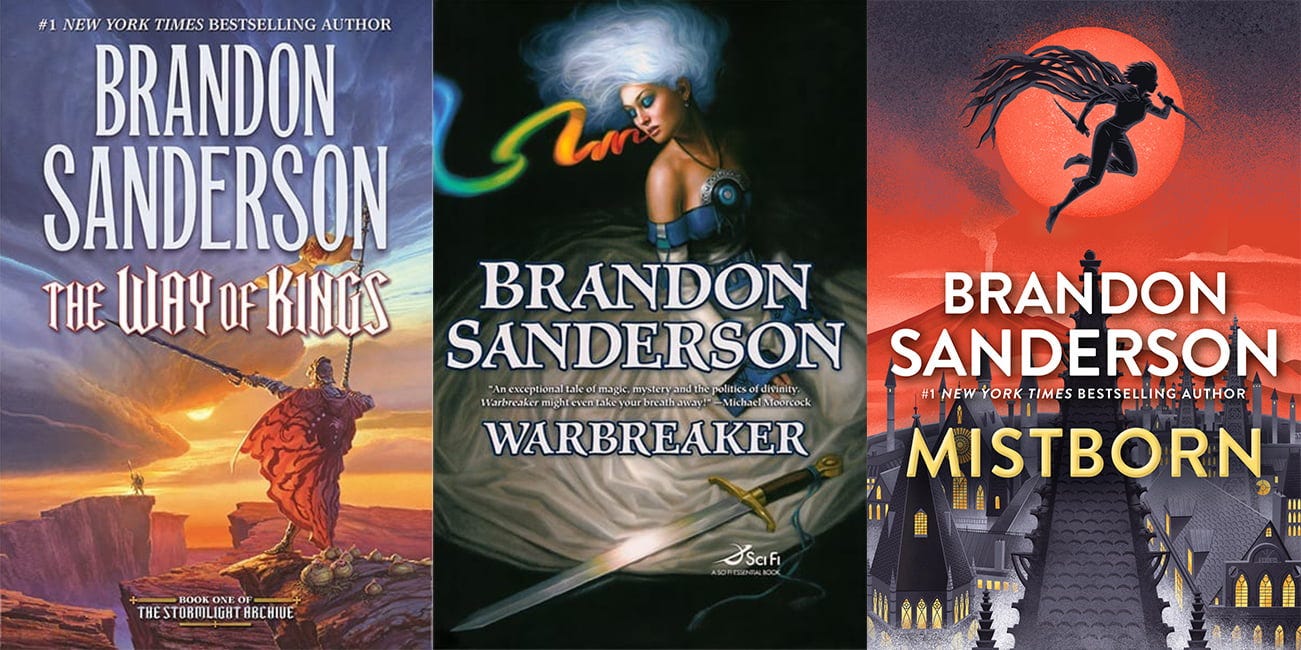
Last year, for the first time, I committed to reading more modern fantasy. I grew up with Harry Potter, The Lord of the Rings, and The Chronicles of Narnia, but I had not ventured much further into the realm of contemporary fantasy literature. In 2024, I set an ambitious goal of reading over 200 books (click here to see how I did that), so I was constantly on the lookout for new recommendations. One name that kept coming up again and again was Brandon Sanderson and his Cosmere universe.
Sanderson is a member of the LDS Church, and while I—as a Baptist minister—have several significant theological differences with Mormonism, I felt confident that his stories would remain grounded in a generally moral framework. I also appreciated not having to worry about explicit content, which made his books an easy recommendation for fellow readers.
Over time, I worked my way through much of the Cosmere, and I absolutely fell in love with the characters, the storytelling, and the extensive world-building. But what stood out to me most was how accurately and compassionately Sanderson portrays characters with disabilities, chronic illness, and mental health struggles. His representation is neither tokenized nor overly sentimental—it’s honest, nuanced, and deeply human.
Here are just a few examples (without spoilers):
Kaladin Stormblessed – A gifted soldier and surgeon who battles major depressive disorder. His inner turmoil and the weight of leadership are portrayed with rare sensitivity.
Shallan Davar – A scholar and Lightweaver who lives with dissociative identity disorder (DID), navigating trauma, memory loss, and fragmented identity.
Rysn Ftori – A determined young woman who becomes paraplegic after a fall. Her journey toward leadership and independence is both empowering and realistic.
Dabbid – A member of Bridge Four who lives with an unspecified condition following trauma. Though largely nonverbal, he plays a meaningful role in the narrative and is never treated as lesser.
These characters are not defined by their conditions, but their experiences shape their resilience, their relationships, and their growth. As a father of two children with disabilities, I found myself deeply moved—and even encouraged—by Sanderson’s careful attention to the emotional and spiritual complexity of living with weakness, difference, and pain.
As a Christian, I believe it is important to cultivate sympathy for those who bear heavy burdens. Reading stories that reflect real mental and physical struggles—especially in a genre often known for escapism—helps build biblical compassion for those made in the image of God. Even in Sanderson’s worlds of magic and storms, there are no easy fixes. These characters endure, adapt, and persevere in ways that are relatable and quietly heroic.
That said, I want to offer a word of caution. In more recent works and public commentary, Sanderson has shown a growing openness to cultural perspectives on gender and sexuality that differ from a biblical worldview. While this does not erase the good in his storytelling, it does mean readers should engage his work with discernment—especially when recommending it to younger readers.
In the end, I am grateful for stories that reflect both the beauty and brokenness of real life. And I am especially grateful for fantasy worlds that do not shy away from disability, but instead invite us to see strength in weakness, purpose in pain, and hope where others might only see hardship.
I was a fan and consumer of fantasy in my youth, but I now have some misgivings about the genre—the escapism and the (nearly) inevitable paganistic elements, to begin with.
However, genre aside, I appreciate the power of well-executed fiction to connect with us deeply and be used of God for our moral development. After all, Christ’s parables (a type of fiction, one could argue) do that. A realistic, intimate portrayal of disability no doubt can go a long way to inspiring understanding and sympathy in those who otherwise have limited exposure.
On Sanderson, he is a gifted writer. I read a couple of his works and listened to some of his lectures about writing. If you haven’t read his novella “Legion,” I’d recommend it. I would even call it Christ-affirming, in a way. But I agree, caution is always warranted. My greatest concern regarding fantasy, and fiction more generally, is less about consuming it and more about being an uncritical admirer of it (which is usually how people consume it, unfortunately).
Anyway, love your writing style, Cody.