

I know many reading this can confidently say they believe in Jesus Christ as their Lord and Savior. You can show fruit from that relationship. We have faith to believe at the hospital bed, we have faith to believe when finances are tight, and we have faith to believe even when sharing the gospel is met with rejection.
However, if you are like me, the temptation to doubt doesn’t usually come in the big concepts—it comes in the practical obedience.
In 2 Samuel 6:6-7 it says:
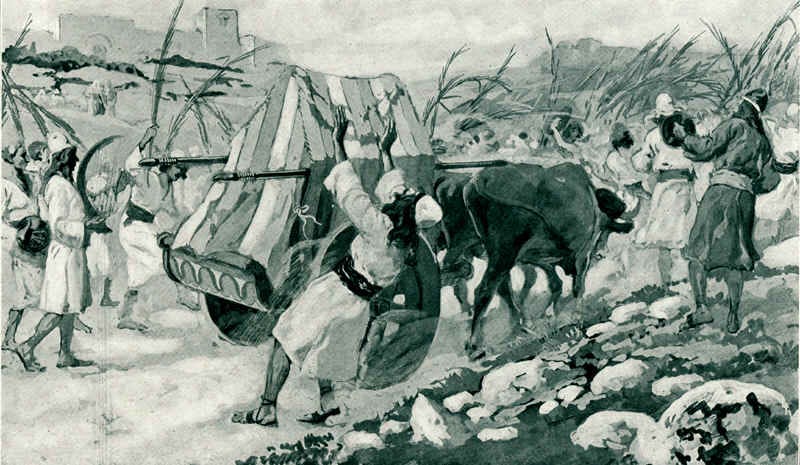
6 When they came to the threshing floor of Nakon, Uzzah reached out and took hold of the ark of God, because the oxen stumbled.
7 The Lord’s anger burned against Uzzah because of his irreverent act; therefore God struck him down, and he died there beside the ark of God.
Uzzah was a Levite. He knew the Law, and the Law was clear:
Numbers 4:15 (ESV)
“But they shall not touch any holy thing, lest they die, and they shall carry those things only by the way that I have commanded them.”
Numbers 7:9 (ESV)
“The Kohathites shall carry these, but they shall not touch them or they will die, for they carry the holy things of the LORD.”
Exodus 25:14 (ESV)
“And you shall put the poles into the rings on the sides of the ark, to carry the ark by them. The poles shall remain in the rings of the ark; they shall not be taken from it.”
Uzzah and his companions exchanged God’s Word for practicality. Rather than carrying the Ark as God commanded, they used a seemingly convenient method to avoid what was prescribed. Uzzah believed God’s throne was holy—he didn’t want it to touch the ground—but he underestimated his own sinfulness and failed to grasp the vast, majestic holiness of God.
Today, our churches may not have an Ark, but we are God’s temple. We have clear instructions on how to conduct worship in His house, guidance for church membership, and instructions on church discipline. Yet how often do we exchange His Word for what is expedient?
The temptation is always practical: to avoid discomfort, to “fix” a situation in our own way, to touch the Ark when it has fallen and try to avoid the scandal or fallout. But Uzzah’s story reminds us that obedience to God’s Word—especially in the practical details—is never optional, and His holiness demands our reverent faithfulness.
Similarly, Scripture gives us clear instructions on how to care for God’s people. In Matthew 18:15-17 (ESV), Jesus instructs:
“If your brother sins against you, go and tell him his fault, between you and him alone. If he listens to you, you have gained your brother. But if he does not listen, take one or two others along with you, that every charge may be established by the evidence of two or three witnesses. If he refuses to listen to them, tell it to the church. And if he refuses to listen even to the church, let him be to you as a Gentile and a tax collector.”
Similarly, 1 Corinthians 5:1-2 (ESV) warns:
“It is actually reported that there is sexual immorality among you, and of a kind that is not tolerated even among pagans, for a man has his father’s wife. And you are arrogant! Ought you not rather to mourn? Let him who has done this be removed from among you.”
Both passages make it clear: the church is called to exercise discipline, treating the assembly as God’s holy, covenant people, and to care for the spiritual health of its members. Many will read these commands and say “Amen,” yet the temptation for church leaders—and for the congregation—is to agree in principle while failing in practice.
One of the clearest examples of this failure is seen in our membership rolls. On a national scale, the Southern Baptist Convention reports nearly 12–13 million members, yet average weekly attendance is just over 4 million—leaving roughly 9 million missing. This pattern is repeated at the local level as well. I have observed churches with over 500 members averaging around 100 in attendance. When we neglect meaningful membership and faithful oversight, we risk taking what God calls holy—His temple, His people—and failing to care for them.
Church discipline is not optional. It is not simply about enforcing rules; it is about restoration, accountability, and love. It is intended to bring wandering or fallen members back into fellowship with God, to encourage the spiritually weak, and to maintain the holiness of the body. When we neglect this, we, like Uzzah, risk substituting practicality for obedience and comfort for faithfulness.
Just as Uzzah misjudged the holiness of God, we too can underestimate the seriousness of living according to His Word—not just in worship, but in how we care for one another, correct one another, and shepherd one another as the holy people of God. True faith shows itself not only in belief but in obedience to God’s commands in the practical details of life and church life.